
2nd Semester
Basic Design 2
Integrating Design Principles and User-Centric Concepts
Planned as an introductory workshop, Basic Design 2 brings together students from the faculties of industrial and communication design. Previous exploration in Basic Design principles has centered on abstract proposals, emphasizing proportions, grids, and scales. The aim of Basic Design 2 is to elevate these foundational skills by integrating them into an exercise that introduces students to the concept of the user for the first time.
The primary challenge of this workshop is to guide students in comprehending usability and how, through the lens of design thinking, they can navigate the design process. This involves generating, refining, and sometimes testing ideas to create an experience that enhances the initial circumstances of the user.
Throughout the workshop, students will engage in the development of an assemble-and-disassemble toy and its technological complement (an APP). This exercise not only allows them to delve into the complexity of interaction design but also emphasizes the complementary roles present in the world of design, as they collaborate with students from both faculties.
The exercise is carefully crafted to enable students to develop skills in 2D and 3D prototyping. On one hand, they will explore basic principles of layout and font consistency, while on the other, they will engage with prototyping workshops, planning, and ultimately developing the final prototype of the toy, predominantly utilizing wood and 3D printing technologies. This holistic approach aims to provide students with a comprehensive understanding of design principles, user-centered concepts, and practical prototyping skills.

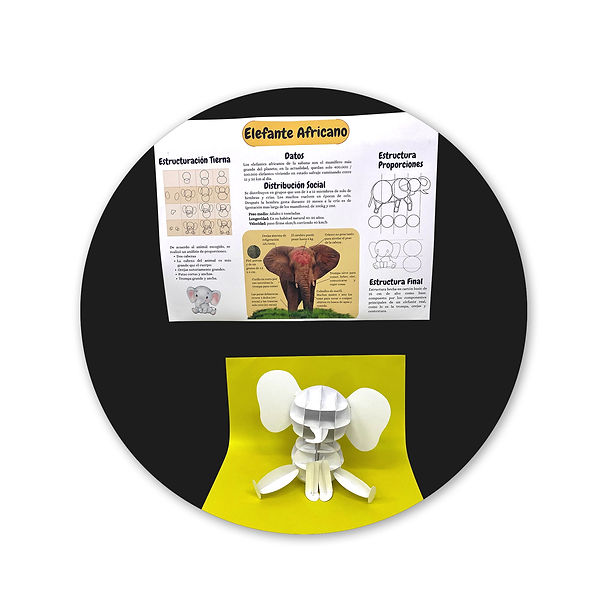
Project: Elefantil
Student: Sara Valentina Mesa Alfonso
Stage 1: Toolbox
Workshop Progression: User-Centric Design and Form Exploration

In the initial stages of the workshop, students immerse themselves in the crucial concept of placing the user at the forefront of the design process. The journey commences with a thoughtful consideration of potential users, focusing on children. Students initiate the process by defining a user persona for each project, derived from preferences and brief research about children.
Simultaneously, students delve into the exploration of form and proportions through a geometrical analysis of animals, fostering both 2D and 3D explorations via rapid prototyping. This dual process not only refines their understanding of design fundamentals but also serves as a foundation for the subsequent stages.
In parallel, recognizing the significance of layout principles, students channel their creativity into crafting infographics. These visual representations serve as a dynamic tool to document the decisions made throughout the entire exploration. This integrated approach ensures that students gain a comprehensive grasp of user-centric design, form exploration, and effective communication of their design decisions.
Project: Happy Friend
Student: Sofia Salinas Martin
Stage 2: Planning
Connecting the App-Toy System with the User: Usability Exploration
The exploration of usability extends to the context of use, prompting students to analyze the routine of their user persona. This approach serves as a strategic method to identify opportunities and pain points, providing valuable insights to inform their design proposals.
Building upon this analysis, students engage in ideation through exercises like Crazy Eights. Once an intriguing proposal is identified, and decisions about volume, form, and proportions of the assemblable toy are made, they move to the refinement stage. This involves planning the construction through the creation of a small wood model. The small model serves as a crucial step, helping students understand the construction nuances of the final product and plan for the integration of 3D-printed joints in the eventual prototype.
In addition to construction considerations, students receive instructions on developing finishes using putty and painting. This process results in the creation of a finishes palette for their final proposal.
Simultaneously, students receive a UI kit enabling them to prototype a wireframe through drag and drop. This exercise allows for a basic understanding of the capabilities of the app and its interaction with the toy. Through this multifaceted approach, students not only gain hands-on experience in the tangible aspects of design but also delve into the digital realm, ensuring holistic and well-rounded skill development throughout the workshop.


Project: Gatos
Student: Eliana Hernandez


Finishes Palettes.
Project: Happy Friend
Student: Sofia Salinas Martin
Project: Gatos
Student: Eliana Hernandez
Project: Elefantil
Student: Sara Valentina Mesa Alfonso

Project: Botanical Dragonfly
Student: Anna Sofia Calderon
Advancing the Toy Design: Exploring New Processes and Materials
In the second stage, students, recognizing the potential for innovation, explore the integration of new processes and materials to elevate their design concepts.
While the initial proposal involves assembling the toy through 3D-printed joints and constructing the main body using layers of wood, some students envision possibilities beyond this. They contemplate incorporating articulated parts, precision-rounded elements requiring turning and carving, and even the integration of materials like acrylics to introduce transparencies. The realization of these ideas involves additional processes such as laser cutting and engraving.
These explorations necessitate further planning by the students. Simultaneously, they become acquainted with the university facilities that facilitate various fabrication processes. This hands-on experience not only refines their design proposals but also familiarizes them with the diverse capabilities of fabrication technologies available within the university setting.
Stage 3: Prototyping
Workshop Purpose: Fostering Reflection on Usability and Design Principles
The purpose of this workshop is to offer a enriching experience that encourages reflection on usability while providing a context for the application of basic design principles.
To facilitate this, we supply most of the tools, including 3D-printed parts and a UI kit, alleviating the need for extensive handling of technical specifics. For instance, the UI kit enables them to construct the screens of their APP proposal with a simple introduction to Figma. Similarly, they can edit specific parts of their 3D-printed components to align them precisely with their toy construction plans.
This approach empowers students to create prototypes that explore concepts without investing excessive time in construction. Simultaneously, it offers them an overview of technologies, fostering familiarity. While the program provides the opportunity for a deeper dive into these topics in subsequent workshops, Basic Design 2 offers a meaningful overview, enabling students to think broadly about their design proposals.

Project: Happy Friend
Student: Sofia Salinas Martin

Exhibition Collaboration: Showcasing Workshop Projects with Team Effort
At the conclusion of each semester, an exhibition showcasing the outcomes of design workshops takes place. The approach for this workshop emphasizes a sense of cooperation, and as a team, we meticulously plan the exhibition guidelines. This collaborative effort aims to create an atmosphere of consistency and coherence among the showcased projects.
By involving students in the planning process, we not only foster teamwork but also ensure a collective and exciting experience for them as they prepare their booths during the exhibition event.
The deliverables for the exhibition include the assembled toy, an infographic detailing the design process, and a QR code presenting the conceptual interaction between the toy and its corresponding app. This holistic approach not only showcases individual project achievements but also reinforces the importance of collaborative planning and presentation in the world of design.
Stand Planning
Project: Doggy
Student: Laura Natalia González Alfonso
Project: El Gato
Student: Juliana Perdomo
Project: PIPO
Student: Heidy Gissel Issa

Project: Elefantil
Student: Sara Valentina Mesa Alfonso
Expanding Challenges and Functionalities: Evolving Design Proposals
The challenge faced by students extends beyond the initial construction of the animal, evolving as they delve deeper into the analysis of the user during the 2nd and 3rd stages of the project. As they gain a more profound understanding of their users, their proposals naturally integrate additional functionalities and challenges aligned with the interactions they believe will enhance the overall experience.
Consequently, many toys feature add-ons that enable the system to create various stimuli, contributing to the enriched and multifaceted experience envisioned for the concept. This iterative process not only refines their designs but also showcases the adaptability and creativity of students as they respond to the evolving needs and preferences of their users.
Final Takeaways
The workshop
Basic Design 2 unfolds as a dynamic journey, guiding students from foundational design principles to a nuanced exploration of user-centric experiences. The workshop not only emphasizes technical proficiency but encourages collaborative innovation across disciplines.
Moving beyond the initial construction phase, students delve into usability, design thinking, and technological integration. The deliberate collaboration fosters a cooperative spirit, mirroring the interdisciplinary reality of design projects.
The workshop's impact extends to thoughtful considerations, with students adding functionalities and challenges aligned with evolving user needs. These innovative toys transcend mere assemblages, embodying a holistic user experience.
By providing curated tools and striking a balance between technical and creative aspects, Basic Design 2 equips students with a comprehensive understanding of design processes. It serves as more than a workshop—it's an immersive experience cultivating design proficiency and nurturing a community of creative thinkers ready to tackle the challenges of the design landscape.
Project: Happy Friend
Student: Sofia Salinas Martin